Pages

Sunday, April 22, 2012

Grace Cossington-Smith

Grace Cossington Smith AO OBE (22 April 1892 – 10 December 1984) was an Australian artist and pioneer of modernist painting in Australia and was instrumental in introducing Post-Impressionism to her home country. Examples of her work are held by every major gallery in Australia.


'Ille terrarum mihi praeter omnes Angulus ridet'

Sunny morning: cows at Lanyon c.1916

Winchester Cathedral

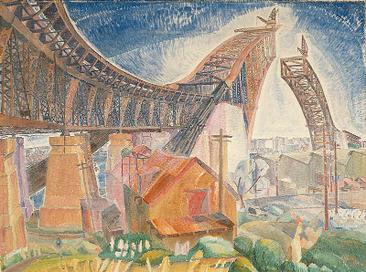
The bridge in curve 1926


Smith's indoor views show the pleasant aspects of a suburban home in Sydney in the 1950s and 1960s. In these works, her love of the colour yellow is most obvious. She loved the colour because it is the colour of the sun, as well as being religiously significant because yellow is a colour of glory. She also regarded yellow as the colour of the Australian bush, rather than other painters at the time who tended to see the Australian countryside as being more reddish than yellowish.


Grace Cossington-Smith: A Retorspective Exhibitionith - National Gallery of Australia

Saturday, April 21, 2012

Meet Kim Mickle


Meet  Kim Mickle - Commonwealth Games Javelin thrower and Australian Olympian 2012.


Kim finished top six at the 2011 IAAF world championships in Daegu (KOR) to qualify for the Australian Olympic Athletics Team (where she also competed with a fractured rib, thinking she had a back injury) . She won a silver medal in the javelin throw at the 2010 Commonwealth Games.

Kim is from Western Australia - Mandurah/Rockingham Club - Perth born girl and I'm one of her sponsors for the 2012 Olympics.

Kim and I exchange phone calls and she is a really bright young athlete with her head screwed on the right way and her feet firmly planted on the ground.

Kim is a graduate of the Emerging Athlete Program of Athletics Australia and one of their High Performance athletes under Athletics Australia's Target Talent Program.

Thursday, April 19, 2012

War Memorials in rural towns

I said in Road Trip : 


"country towns try to 'outdo' each other on the lavishness of their memorials"

and I attached this photo of the Boorowa War Memorial:

Not a good photo, I know, but taken through the windscreen of a car as it drove past the memorial it's not too bad - it gives you the idea.

Today I had to take a client to Oncology in Goulburn and while waiting I had my lunch in Belmore Park. Now Belmore Park is situated in the centre of the City of Goulburn, on the site of the original Market Place, Belmore Park is a prominent landmark, popular with residents and visitors alike.

The beautiful Victorian architecture of the Band Rotunda and many varied Civic Monuments are framed by mature trees and colourful floral displays. Belmore Park is the heart and soul of Goulburn. It has been, and continues to be, the place where groups of citizens gather to celebrate events in the life of the city. 

It has fine examples of oak trees growing as central features:


It has a horticultural greenhouse that rarely seems to suffer any damage despite being located in the centre of Australia's very first "Inland City"


There are two War Memorials situated in Belmore Park - the first is the post-World War I Memorial:


The second is the memorial to the World War II fallen and all those who have fallen in conflicts during and since World War II :


Now this is an amazing tribute to all those who served during World War II and in subsequent conflicts following that war who paid the supreme sacrifice. Inscribed with 3,000 names on bronze plates, all in alphabetical order , from "Abernethy to Zdanowski" :


This is the dedication inscribed on that memorial:


If that is not extraordinary enough, then read this little dedication at the base of the main dedication:


As I commented earlier - country towns have a proud history in remembering all those who served and, in particular, all those who gave their lives for their country.

They guard their history jealously and while it would be hard to get anyone from the respective Services Organisations to admit openly to it, they remain steadfastly competitive in their efforts  "... to 'outdo' each other on the lavishness of their memorials. ..."

My own town is no different, having a significant memorial located on the footpath in front of the "Memorial Hall" in the main street.

It is truly amazing how time fails to diminish the myths and legends of our pioneers and how we almost deify them. 

It must be in a similar vein that we continue to feel so indebted to those brave young people who went off to fight so many wars, for whatever their personal reasons, never to return to their native land and remain (mostly) buried in some foreign field.

Lest we Forget!

Monday, April 16, 2012

Sunday with an old friend

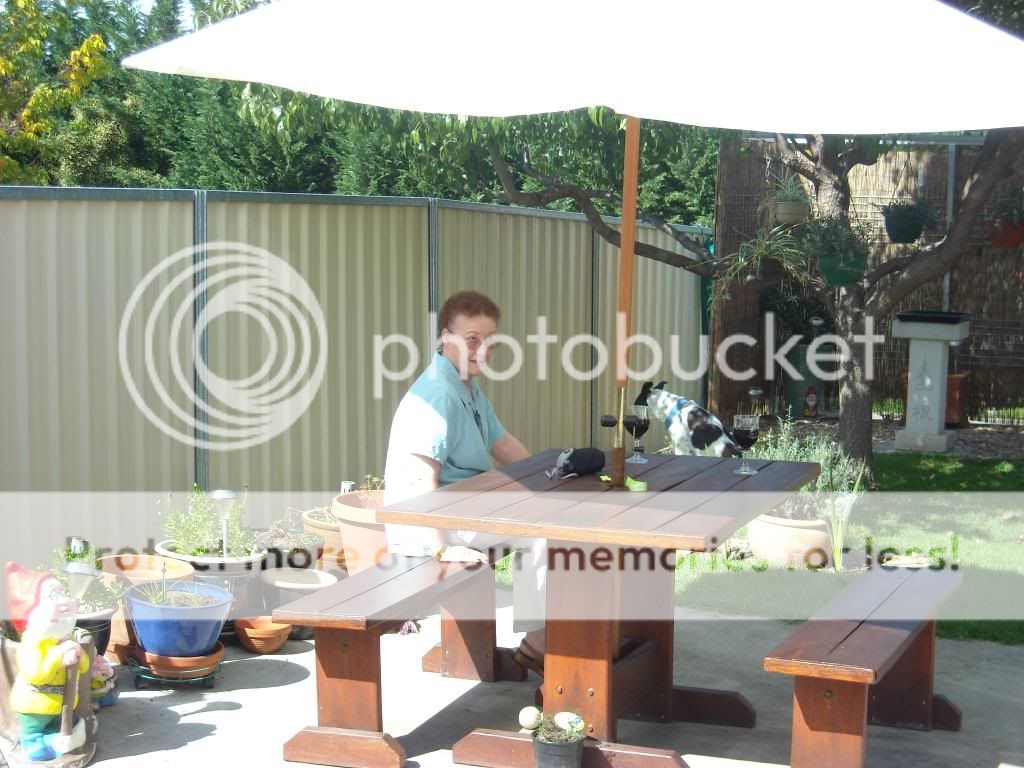
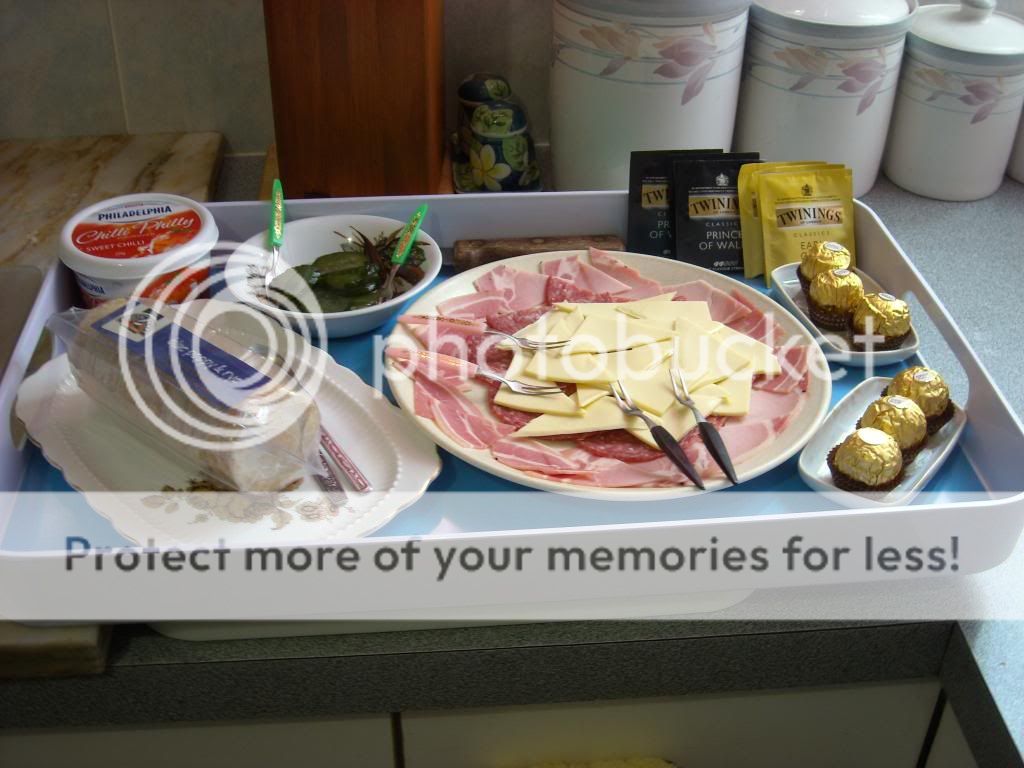
A dear old friend of mine (ours) - 'Neen - came over to visit me on Sunday. The weather was fine so we sat outside with some wine and nibbles.

'Neen and Denny
Nibbles

A butterfly/moth decided to share our nibbles and wine with us

It was a pleasant way to spend a Sunday afternoon. Rhonda had to work.

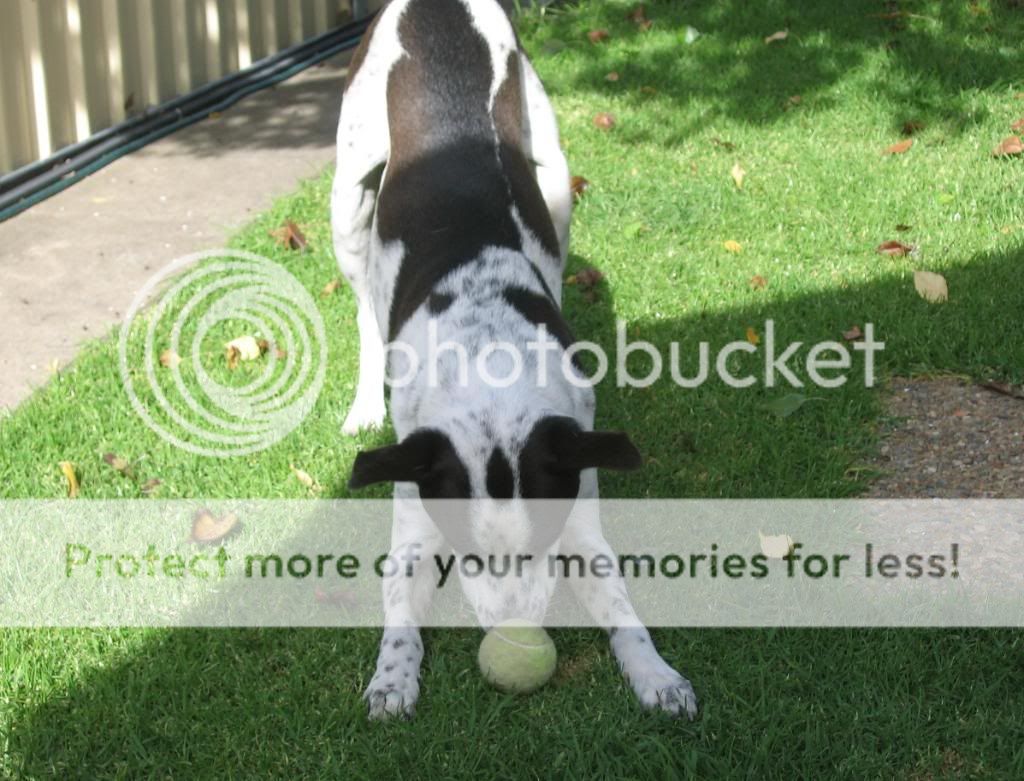
Denny didn't want to be left out, so he brought his tennis ball and began to '
show off' his toss and catch tricks!
Neen brought over a family photo - her Mum, son, new grand-daughter (McKenzie) and 'Neen

Road trip

Rhonda and I had a few things to attend to in Cowra so we decided to do an overnight trip to "The Camp" where we could also check the state of things after the Easter public holidays, cut the grass, etc.

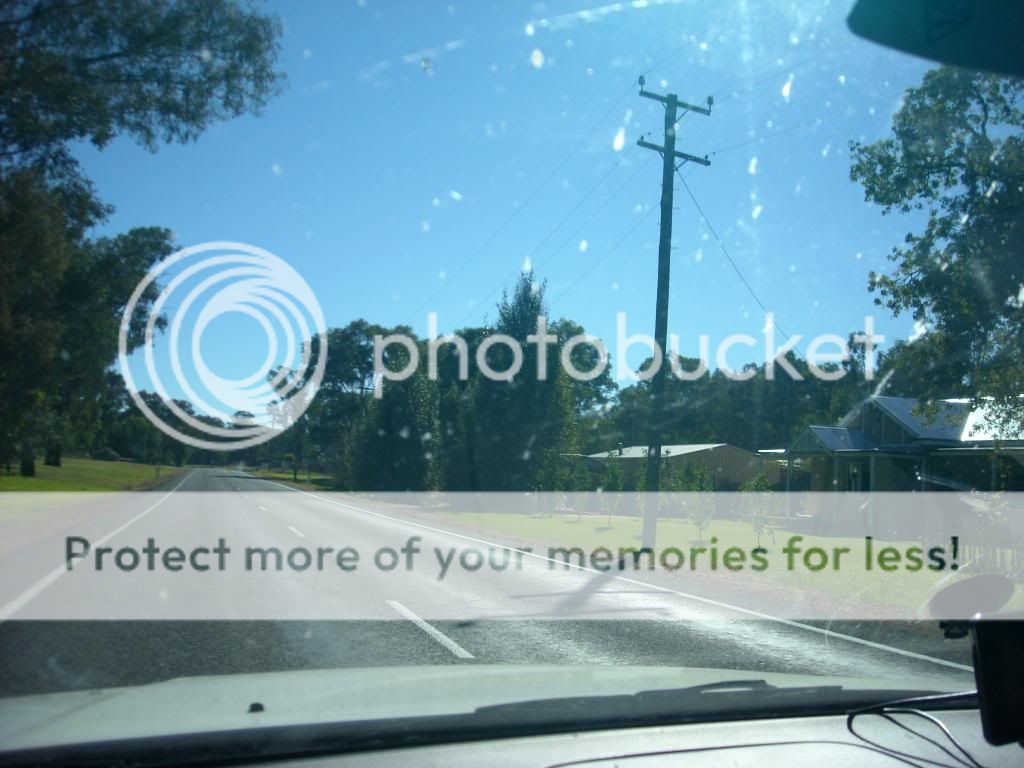
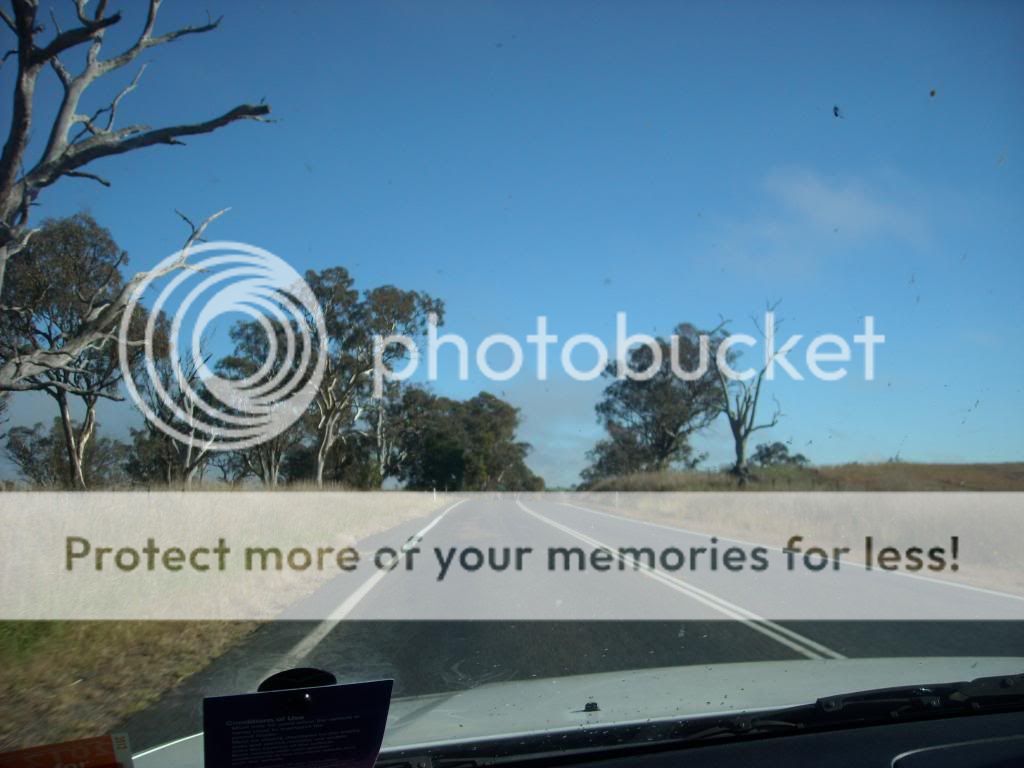
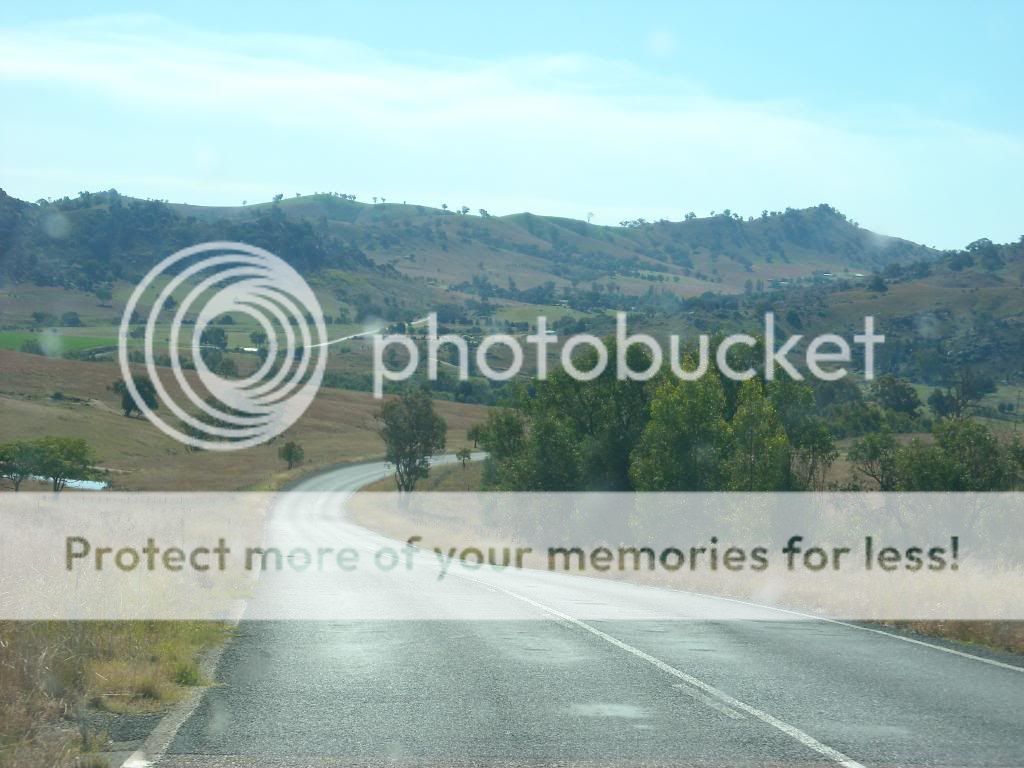
I was still not 100% so I sat in the passenger seat while Rhonda drove up and back. The trip was about 2 hours and involved three major towns, each with their own hill ranges that led into broad valleys. The further west you went the broader and flatter the valley floor.

Leaving home - fog in town

Across the highway and onto the Yass plains  - the Lachlan Valley Way,
Route 81, Yass to Cowra

Into Boorowa

Boorowa War Memorial - country towns try to 'outdo' each other on the
lavishness of their memorials

Boorowa Plains

Morongalo - blink and you miss it.

Over the range and into Cowra plains

Entering Cowra - Railway bridge ahead

Cowra main street (Hate it - mostly reverse 45 degree parking)

Rocky hills, Darbys Falls - used in days gone by as lookouts
by Bushrangers (outlaws)

Darbys Falls - don't blink

Wyangala store and service station. Only this and the Country Club
as local businesses

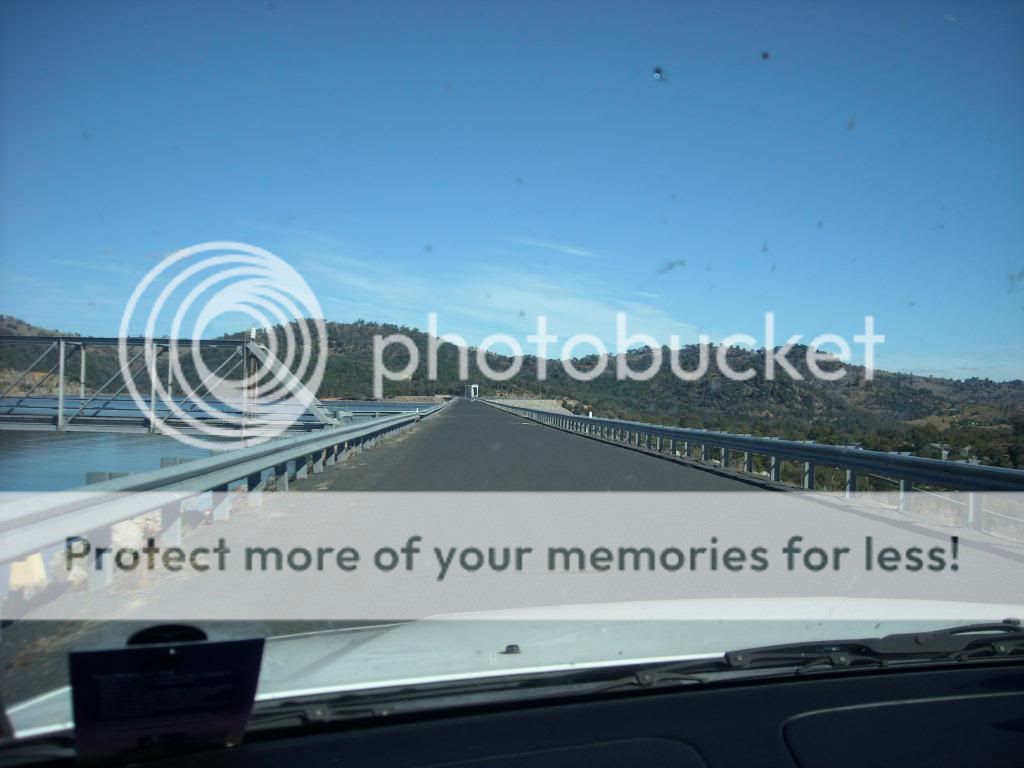
Across the dam wall at Wyangala - soon to be closed to the public and a
detour route established through Wyangala township

Dam flood gates

Granite cutting - pneumatic drilled and dynamited out of the granite base.

Granite outcrops typical of the Wyangala, Darbys Falls,
Frogmore region almost like a collection of natural monolithic Menhirs!

Heading back home

Turning back onto Lachlan Valley Way - Route 81

Back into town

Over the bridge, turn right and home again!


Saturday, April 14, 2012

Who's the biggest tyre maker in the world?


Dunlop? Bridgestone? No, the answer is Lego.

As in the toy maker that has brought out the engineer in children around the world.
It turns out Lego produced 381 million tyres last year and last week it celebrated the 50th anniversary of the first one.
Kit No.400 was released in 1962, featuring the first Lego wheel-and-tyre set. It was such a hit that in 1967 it notched up 820,400 sales.

Slow Cooker Lamb

I'm cooking this tomorrow.


SLOW COOKER LAMB STROGANOFF


Ingredients:

½  kg lamb chunks
4 lamb kidneys, cleaned and quartered
¼  cup all-purpose flour
½  teaspoon salt
1 medium onion, chopped
1 can chopped mushrooms, drained
1 clove garlic, minced
1 cup of beef or vegetable stock
1 cup sour cream

Preparation:

Add lamb chunks, kidneys salt, onion, mushrooms and garlic into a plastic bag, add flour and toss to mix and coat well.
Put in slow cooker and add stock.
Cover and cook on LOW for 7 to 9 hours.
Stir sour cream into hot meat mixture about 10 minutes before